Cart
0
What It Does & How to Use It Correctly
If there's one skincare ingredient that dermatologists consistently agree on, it's vitamin C. It's one of the most researched antioxidants in skincare, and for good reason — it targets dullness, uneven tone, fine lines, and dehydration all at once. But despite being a skincare staple, a lot of people are still using it incorrectly, which means they're not getting the results they're paying for.
In this guide, we'll break down exactly what vitamin C does to your skin on a scientific level, the real benefits you can expect, and — most importantly — how to use vitamin C serum correctly so you actually see results.
What Is Vitamin C Serum and Why Does It Matter?
Vitamin C (ascorbic acid) is a potent antioxidant, meaning it neutralizes free radicals — the unstable molecules generated by UV exposure, pollution, and everyday environmental stress that break down collagen and accelerate visible aging. Unlike moisturizers that sit on the surface, a well-formulated vitamin C serum is designed to penetrate deeper into the skin barrier, where it can actually go to work at a cellular level.
Serums are lightweight and carry a higher concentration of active ingredients than creams, which is why vitamin C is almost always formulated as a serum rather than a lotion — it needs to be able to absorb quickly and reach the layers of skin where collagen production and pigmentation actually happen.
The Science-Backed Benefits of Vitamin C for Skin
1. Brightens Skin and Fades Dark Spots
Vitamin C inhibits an enzyme called tyrosinase, which is directly responsible for melanin production. Less tyrosinase activity means less excess pigment — which translates to fewer dark spots, less post-acne discoloration, and a more even overall tone over time.
2. Boosts Collagen Production
Vitamin C is a required cofactor for collagen synthesis. Without adequate vitamin C, your body simply cannot produce collagen efficiently. Topical application helps support firmer, more resilient skin and can soften the appearance of fine lines over consistent use.
3. Protects Against Environmental Damage
As an antioxidant, vitamin C helps defend skin cells against oxidative stress caused by UV rays and pollution. While it's not a replacement for SPF, it works well alongside sunscreen as a first line of defense in the morning.
4. Improves Skin Texture and Hydration
Many vitamin C serums are formulated with hydrating carriers like hyaluronic acid, which helps the skin feel plumper and smoother, not just brighter.
5. Evens Out Redness and Sensitivity-Related Discoloration
Vitamin C has mild anti-inflammatory properties, which can help calm visible redness over time — particularly useful for anyone dealing with post-breakout marks or general unevenness.
Good to know: Results from vitamin C are cumulative, not instant. Most people start noticing a visible brightening effect after 4–6 weeks of consistent daily use — not overnight.
How to Use Vitamin C Serum Correctly
This is where most people go wrong. Vitamin C is a powerful active ingredient, but it's also sensitive to how — and when — you apply it. Here's the correct order of operations:
- Cleanse first. Always apply vitamin C to a clean, dry face so it can absorb properly without competing with dirt, oil, or leftover product.
- Apply in the morning. Vitamin C works best as a daytime step since it helps neutralize free radical damage from UV and pollution exposure throughout the day.
- Use 3–5 drops. A little goes a long way. Pat gently into skin rather than rubbing aggressively.
- Let it fully absorb. Wait 60–90 seconds before applying your next product so the serum has time to sink in.
- Follow with moisturizer. This locks in hydration and helps offset any mild dryness some vitamin C formulas can cause initially.
- Always finish with SPF. This is non-negotiable. Vitamin C makes your skin more resilient to sun damage, but it does not replace sunscreen — the two work together, not as substitutes for each other.
What NOT to Do
- Don't apply vitamin C at the same time as products containing niacinamide or benzoyl peroxide unless your formula is specifically designed for it — layering certain actives can reduce effectiveness or cause irritation.
- Don't store your serum in direct sunlight or heat — vitamin C oxidizes easily, which is why proper packaging (like dark, airtight bottles) matters.
- Don't expect overnight results — consistency matters more than concentration.
Who Should Use Vitamin C Serum?
Vitamin C is broadly suitable for most skin types, including those dealing with dullness, uneven tone, early signs of aging, or post-acne marks. If you have particularly reactive or sensitive skin, it's worth patch-testing first and starting with application every other day before working up to daily use.
Ready to Add Vitamin C to Your Routine?
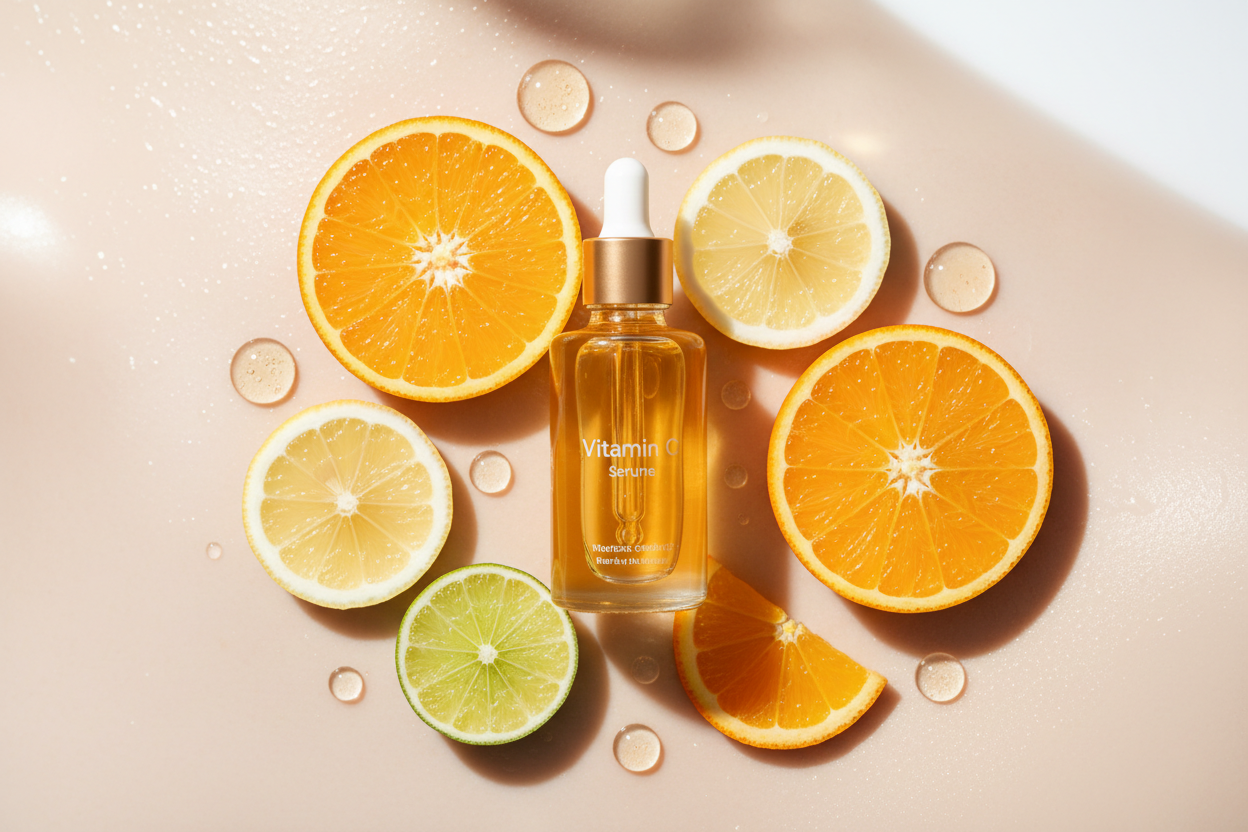
Our Vitamin C Serum is formulated to brighten, firm, and even out skin tone with consistent daily use — lightweight, fast-absorbing, and layer-friendly.
Shop Vitamin C SerumFrequently Asked Questions
How long does it take to see results from vitamin C serum?
Most people see initial brightening within 2–4 weeks, with more noticeable improvements in tone and texture around the 6–8 week mark of consistent use.
Can I use vitamin C serum every day?
Yes, for most skin types daily use is fine and recommended. Those with sensitive skin may want to start every other day and build up tolerance.
Should vitamin C serum go before or after moisturizer?
Always before. Apply vitamin C serum to clean skin first, let it absorb, then follow with moisturizer to seal everything in.
Can vitamin C serum be used with sunscreen?
Yes — in fact, they work best together. Apply vitamin C serum first, let it absorb, then apply sunscreen as your final morning step.
Vitamin C remains one of the few ingredients backed by decades of dermatological research, but its benefits only show up with correct, consistent use. Cleanse, apply, let it absorb, moisturize, and protect with SPF — that's the full formula for getting real results from your vitamin C serum.